

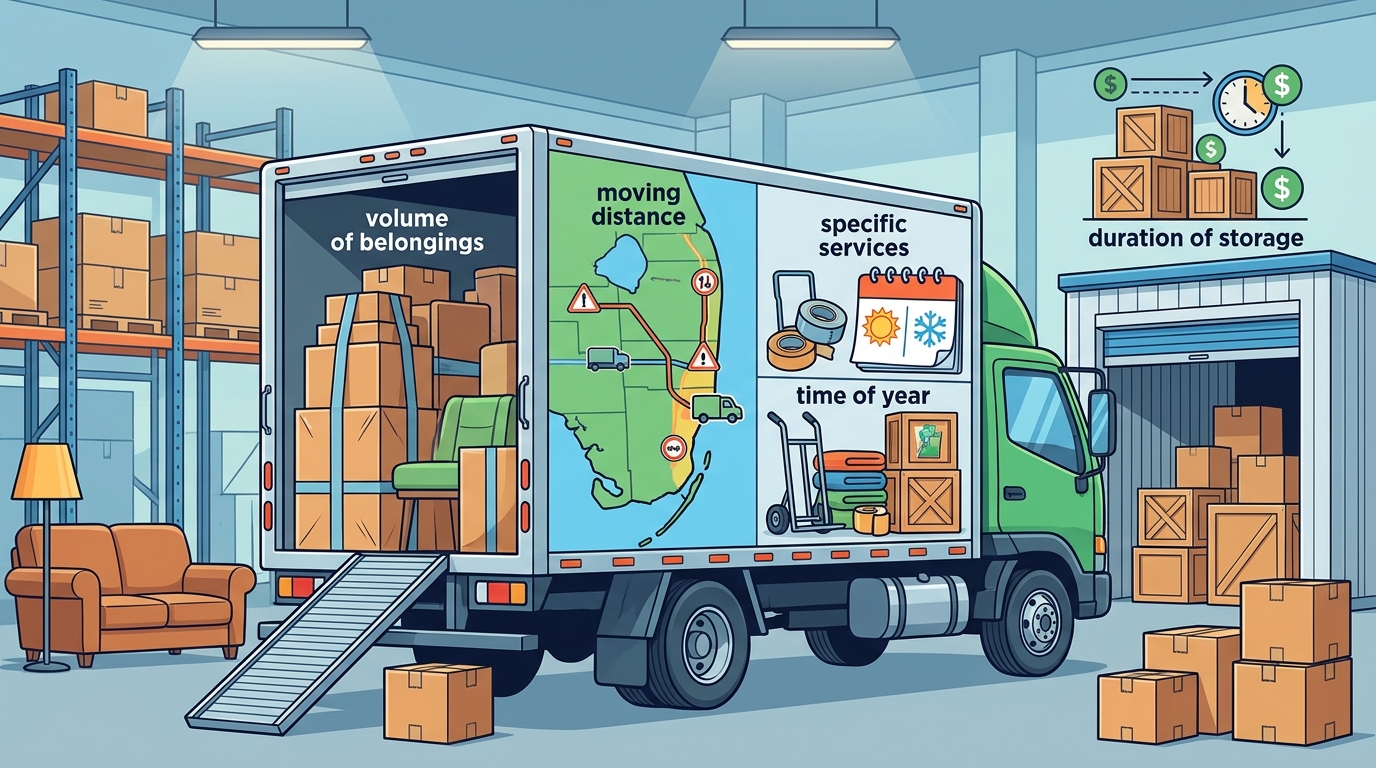
Moving and storage costs in Miami are primarily driven by the volume of your belongings, the distance of the move, and the specific services you require. Additional variables include the time of year, the accessibility of your buildings, and the duration of storage. Understanding these factors helps you budget accurately and avoid unexpected fees. SF Local Moving Inc provides transparent estimates that account for these local variables. according to Understanding Your Hospital
Volume and Weight of Belongings
The most significant factor in determining your moving cost is the total volume and weight of your items. Movers typically calculate pricing based on the cubic feet of space your belongings occupy or the total weight of the load. A larger load requires more truck space, more packing materials, and more labor hours to load and unload. In Miami, where many residents live in high-rise condominiums, the density of items can also impact the time required for the move. according to Understanding Your Hospital
For storage, the cost is directly tied to the size of the unit you need. A small apartment move might require a 5x10 unit, while a large family home might need a 10x20 unit. Accurately assessing your inventory is the first step in getting a reliable quote. Residential moving services often include an on-site or virtual assessment to ensure the estimate reflects your actual needs.
Distance and Building Accessibility
The distance between your current and new locations is a primary cost driver. Local moves within Miami-Dade County are usually charged by the hour, while long-distance moves are priced by weight and distance. However, in the Miami area, accessibility can be just as important as distance. Many buildings in Brickell, Downtown Miami, and South Beach have strict elevator reservation policies, limited parking, or narrow stairwells.
These factors can increase the time required for the move, which in turn increases the cost. For example, moving a piano down a narrow staircase without an elevator requires more labor and specialized equipment. Piano moving and other specialty items often carry additional fees due to the complexity and risk involved. Always disclose building access details when requesting a quote to ensure accuracy.
Service Levels and Add-Ons
The level of service you choose significantly impacts your final bill. A basic move might only include loading and unloading, while a full-service move includes packing, unpacking, and furniture assembly. Each additional service adds to the cost but can save you time and stress. For instance, professional packing services ensure that fragile items are protected, reducing the risk of damage.
Storage costs also vary based on the type of unit and additional features. Climate-controlled units are more expensive than standard units but are essential for protecting sensitive items like wood furniture, electronics, and documents from Miami's humidity. Long-term storage options often include insurance and security features, which are factored into the monthly rate. Understanding which services you truly need helps you avoid paying for unnecessary add-ons.
Seasonality and Demand
Timing your move can have a substantial impact on your costs. Moving companies in Miami experience peak demand during the summer months and at the beginning and end of the month. These periods often come with higher prices due to increased competition for trucks and crews. Conversely, moving on a weekday in the middle of the month or during the off-season can result in lower rates.
Storage costs may also fluctuate based on demand. During peak moving seasons, storage facilities may have fewer available units, which can drive up prices. Planning your move and storage needs in advance allows you to secure better rates. Short-term storage is a flexible option for those who need temporary space during a transition, and pricing is often more predictable when booked early.
Specialty Items and Complexities
Certain items require specialized handling and equipment, which increases the cost of your move. Artwork, antiques, and high-end electronics need custom crating and careful packing to prevent damage. These specialty items often require additional labor and materials, which are reflected in the final price. Art and antique moving services are designed to protect these valuable possessions, ensuring they arrive in perfect condition.
Other complex items, such as hot tubs, safes, and large appliances, also require special equipment and expertise. Moving a hot tub, for example, may involve using a forklift or crane, which adds to the cost. It is important to identify all specialty items when requesting a quote to ensure that the estimate includes the necessary resources. This transparency helps you avoid surprises on moving day.
Key Takeaways
- Volume and weight are the primary determinants of moving and storage costs.
- Building accessibility and distance significantly impact labor time and pricing.
- Service levels, such as packing and unpacking, add to the total cost but offer convenience.
- Climate-controlled storage is essential for protecting items from Miami's humidity.
- Seasonal demand affects pricing, with peak times costing more.
- Specialty items like art and pianos require specialized handling and equipment.
- Transparent estimates from reputable companies help avoid hidden fees.
Frequently Asked Questions
What is the most expensive part of a move in Miami?
The most expensive part of a move is often the labor required to handle specialty items or navigate difficult building access. Moving large or fragile items, such as pianos or artwork, requires specialized equipment and skilled labor, which increases the cost.
How does humidity affect storage costs in Miami?
Humidity can damage sensitive items, so climate-controlled storage is often necessary. These units are more expensive than standard units but protect your belongings from mold, mildew, and warping.
Are there hidden fees in moving quotes?
How far in advance should I book a move?
It is recommended to book your move at least two to four weeks in advance, especially during peak seasons. This ensures that you secure your preferred date and potentially better rates.
What is the difference between local and long-distance moving costs?
Local moves are typically charged by the hour, while long-distance moves are priced by weight and distance. Long-distance moves often include additional services, such as insurance and tracking, which affect the total cost.
Can I save money by packing myself?
Yes, packing yourself can reduce labor costs. However, you will need to purchase your own packing materials, and there is a higher risk of damage if items are not packed correctly. Professional packing services offer convenience and protection.
Conclusion
Understanding the factors that affect moving and storage costs in Miami is essential for budgeting and planning. By considering volume, accessibility, service levels, seasonality, and specialty items, you can make informed decisions and avoid unexpected expenses. Request a quote from SF Local Moving Inc to get a transparent estimate tailored to your specific needs.