
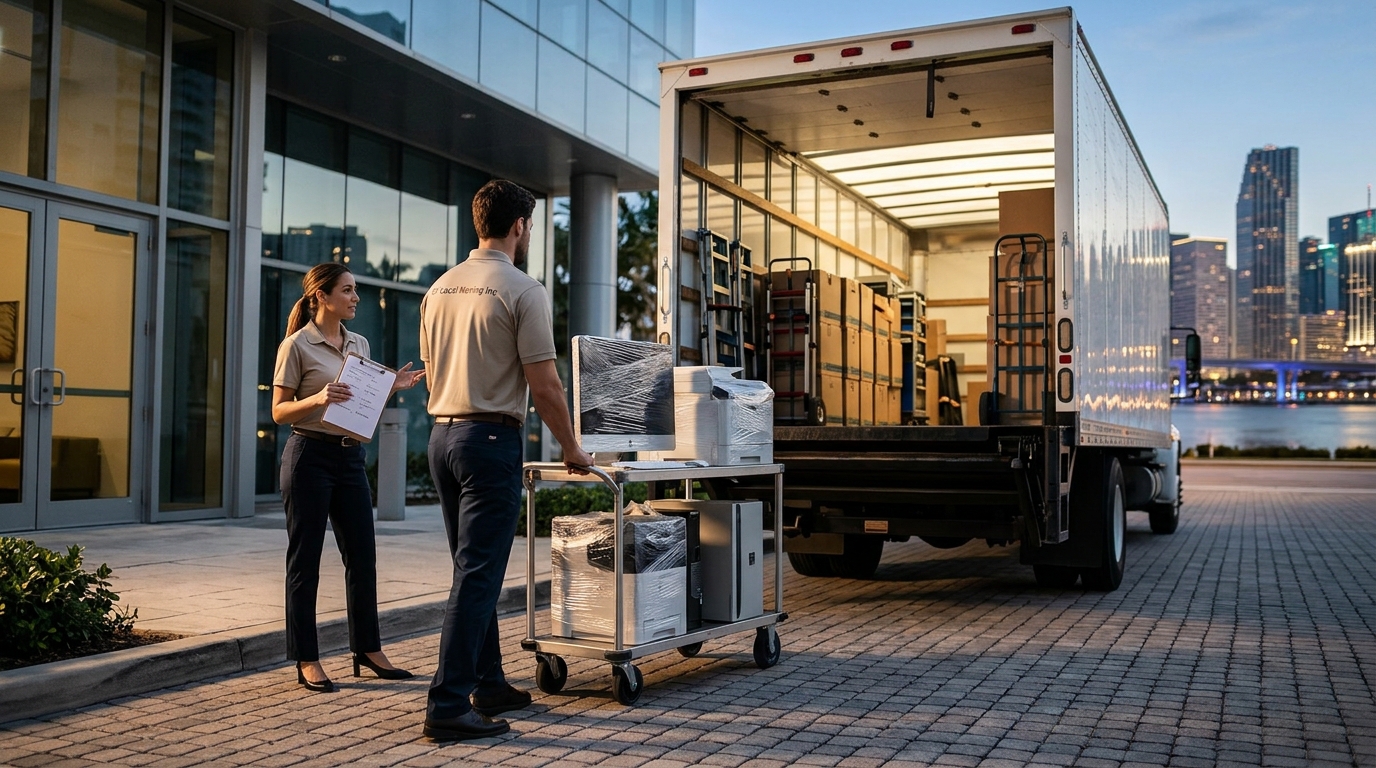
Reliable commercial moving services in Miami are defined by strict licensing, specialized office relocation experience, flexible scheduling, and deep local logistics knowledge. This guide examines these four critical pillars to help business owners select a partner that ensures operational continuity. We explore how commercial moving services in South Florida meet these standards to protect your assets and minimize downtime.
Licensing and Insurance
Legal compliance is the baseline for any trustworthy moving operation. Commercial moving licensing is the regulatory authorization that permits a company to transport goods across state or local lines. In Florida, businesses must adhere to strict state and federal regulations to operate legally. Without proper documentation, a moving company cannot legally bind itself to a contract, leaving your business vulnerable in the event of a dispute.
State and Federal Registration
Operating in Miami requires adherence to both Florida Department of Transportation (FDOT) and Federal Motor Carrier Safety Administration (FMCSA) standards. A legitimate local mover holds a valid USDOT number, which serves as a public identifier for their safety and operational history. For SF Local Moving Inc, this includes specific state authority numbers that verify their right to conduct intrastate moves within the state. Verifying these numbers on official government databases is a critical first step for any procurement manager.
Insurance Coverage and Liability
Insurance is the financial safety net that protects your company from loss. Commercial moving insurance is a policy that covers damage to goods in transit, providing compensation if items are broken or lost. Standard liability coverage is often minimal, so businesses should inquire about full value protection or specialized cargo insurance. A reliable provider will be fully bonded and insured, ensuring that their employees are vetted and that their operations are covered against negligence. This layer of protection is essential when moving high-value assets like servers, medical equipment, or executive furniture.
Commercial Relocation Experience
Residential movers often lack the specific protocols required for a corporate environment. Commercial relocation experience is the specialized knowledge of handling office infrastructure, IT equipment, and business continuity during a move. Unlike a home move, a business relocation must minimize downtime. Every hour of inactivity represents lost revenue and reduced productivity. Experienced commercial movers understand the difference between moving a sofa and moving a network server rack.
Handling Specialized Equipment
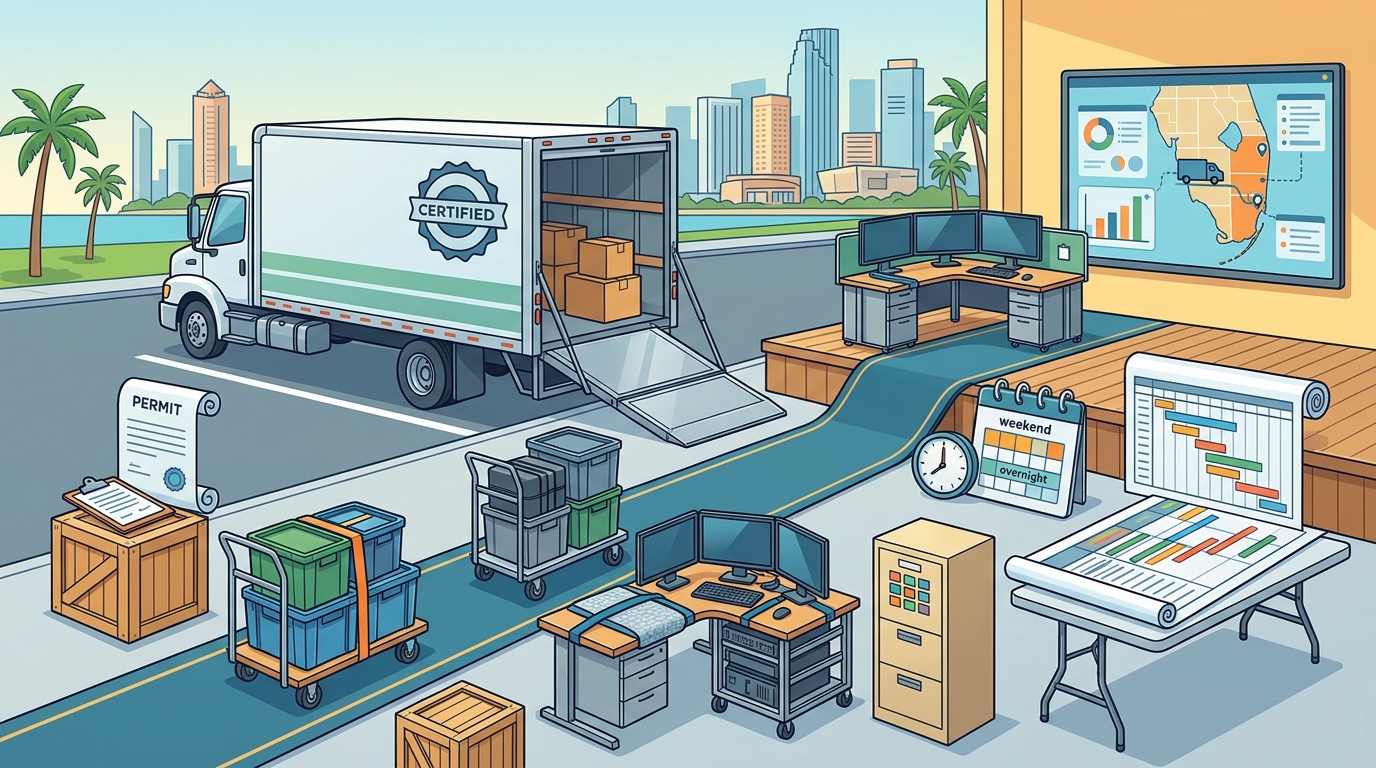
Modern offices are filled with sensitive technology that requires careful handling. Movers must be trained to disconnect, wrap, and transport computers, networking gear, and large monitors without causing static discharge or physical damage. Specialty moving services often include the careful transport of items that standard crews might mishandle. This includes heavy machinery, large appliances, and delicate antiques that may be part of a corporate lobby or executive suite. The ability to manage these items without external IT support is a hallmark of a mature commercial moving team.
Efficiency and Downtime Management
Time is the most critical resource in a commercial move. A reliable service provider will create a detailed timeline that accounts for loading, transit, and setup. They should be able to work around your business hours, often performing the bulk of the heavy lifting on weekends or nights. This approach ensures that your team can return to work on Monday morning with their desks set up and equipment connected. The goal is a seamless transition where the physical move does not disrupt the operational rhythm of the company.
Scheduling Flexibility
Business operations do not always align with standard moving company hours. Scheduling flexibility is the ability of a moving company to accommodate non-standard hours, such as nights, weekends, and holidays, to minimize business disruption. For many Miami businesses, the only viable window for a move is after 6:00 PM or on a Saturday. A rigid schedule can force a company to close early or lose a full day of productivity, which is often unacceptable for growing firms.
After-Hours and Weekend Availability
Top-tier commercial movers offer 24/7 availability or at least extended evening hours. This allows for the loading of heavy items like filing cabinets and desks after the office empties. It also allows for the unloading and setup at the new location before the start of the next business day. SF Local Moving Inc operates with extended hours, recognizing that the commercial sector requires this adaptability. This flexibility is not just a convenience; it is a strategic advantage that protects your bottom line.
Emergency and Last-Minute Moves
Sometimes, a lease ends unexpectedly, or a new office becomes available on short notice. A reliable partner will have the capacity to handle last-minute requests without compromising quality. This requires a well-managed fleet and a stable workforce that can be deployed on short notice. The ability to pivot and execute a move within 48 to 72 hours is a strong indicator of a company's operational resilience and resource management.
Local Logistics Expertise
Miami's unique geography and infrastructure present specific challenges for moving crews. Local logistics expertise is the practical knowledge of navigating the specific traffic patterns, building regulations, and parking constraints of the Miami and South Florida region. A mover who has only worked in suburban areas may struggle with the high-rise condos and dense downtown office parks that define the Miami business landscape.
Navigating High-Rise and Condo Restrictions
Many Miami offices are located in high-rise buildings with strict elevator reservation policies. Movers must know how to book freight elevators, which often requires 48 to 72 hours' notice. They must also be familiar with building management rules regarding floor protection, noise levels, and loading dock hours. A local expert will have established relationships with building managers and knows the specific quirks of major office complexes in Brickell, Downtown Miami, and the Design District.
Traffic and Parking Strategies
South Florida traffic is unpredictable, and parking in commercial zones is often scarce. A reliable moving company will plan routes that account for rush hour delays and will have strategies for securing parking for their trucks. This might involve using specific loading zones or coordinating with local authorities for temporary permits. Understanding the local landscape ensures that the move stays on schedule and that the crew is not stuck in traffic or ticketed for illegal parking.
Comparison of Moving Service Qualities
| Quality Metric | Standard Residential Mover | Reliable Commercial Mover |
|---|---|---|
| Licensing | Basic state registration | Full USDOT and State Authority, Bonded & Insured |
| Equipment Handling | General furniture and boxes | IT equipment, servers, and heavy machinery |
| Scheduling | Weekdays, 9 AM to 5 PM | Nights, Weekends, and Holidays |
| Local Knowledge | General area familiarity | Specific building rules and traffic strategies |
| Liability Coverage | Basic carrier liability | Full value protection and specialized cargo insurance |
Key Takeaways
- Verify that the moving company holds a valid USDOT number and state authority to operate in Florida.
- Ensure the provider is fully bonded and insured, with coverage that extends to high-value commercial assets.
- Look for specific experience in handling IT equipment and office infrastructure to prevent data loss or hardware damage.
- Confirm that the company offers after-hours and weekend availability to minimize business downtime.
- Assess the mover's familiarity with Miami's high-rise buildings, elevator reservations, and local traffic patterns.
- Choose a partner that provides a detailed timeline and clear communication channels throughout the relocation process.
- Review recent client testimonials to gauge the company's reliability and attention to detail in commercial settings.
Frequently Asked Questions
What is the difference between residential and commercial moving?
Commercial moving focuses on business assets, IT equipment, and minimizing operational downtime, whereas residential moving focuses on personal household items and family comfort. Commercial moves often require specialized handling for servers and office furniture.
Do I need to be present during a commercial move?
It is highly recommended that a designated representative from your company be present to oversee the move, sign off on inventory, and make real-time decisions. This ensures that the movers follow your specific instructions for setup and organization.
How much insurance coverage should I request?
You should request full value protection or a specialized cargo insurance policy that covers the replacement value of your items. Basic carrier liability is often insufficient for high-value business equipment like computers and medical devices.
Can movers handle server racks and networking equipment?
Yes, experienced commercial movers are trained to disconnect, wrap, and transport sensitive IT equipment. They use anti-static materials and secure strapping to ensure that servers and networking gear arrive safely and are ready for reconnection.
How far in advance should I book a commercial move?
It is best to book at least two to four weeks in advance to allow for a site survey, elevator reservations, and detailed planning. However, reliable companies may accommodate last-minute requests if their schedule permits.
What are the benefits of using a local Miami moving company?
Local companies have specific knowledge of Miami's traffic, building regulations, and parking constraints. This expertise helps them navigate the unique challenges of the South Florida market more efficiently than out-of-state providers.
How does SF Local Moving Inc handle commercial moves?
SF Local Moving Inc provides full-service commercial relocation, including packing, transport, and setup. They are licensed, insured, and experienced in handling the specific needs of Miami businesses, ensuring a smooth and stress-free transition.
Conclusion
Selecting the right commercial moving partner is a strategic decision that impacts your business's operational continuity. By prioritizing proper licensing, specialized experience, flexible scheduling, and local expertise, you can ensure a safe and efficient relocation. SF Local Moving Inc offers the comprehensive services and local knowledge required to navigate the complexities of moving in Miami. To plan your next commercial relocation, request a free quote today and experience the difference of a trusted local partner.